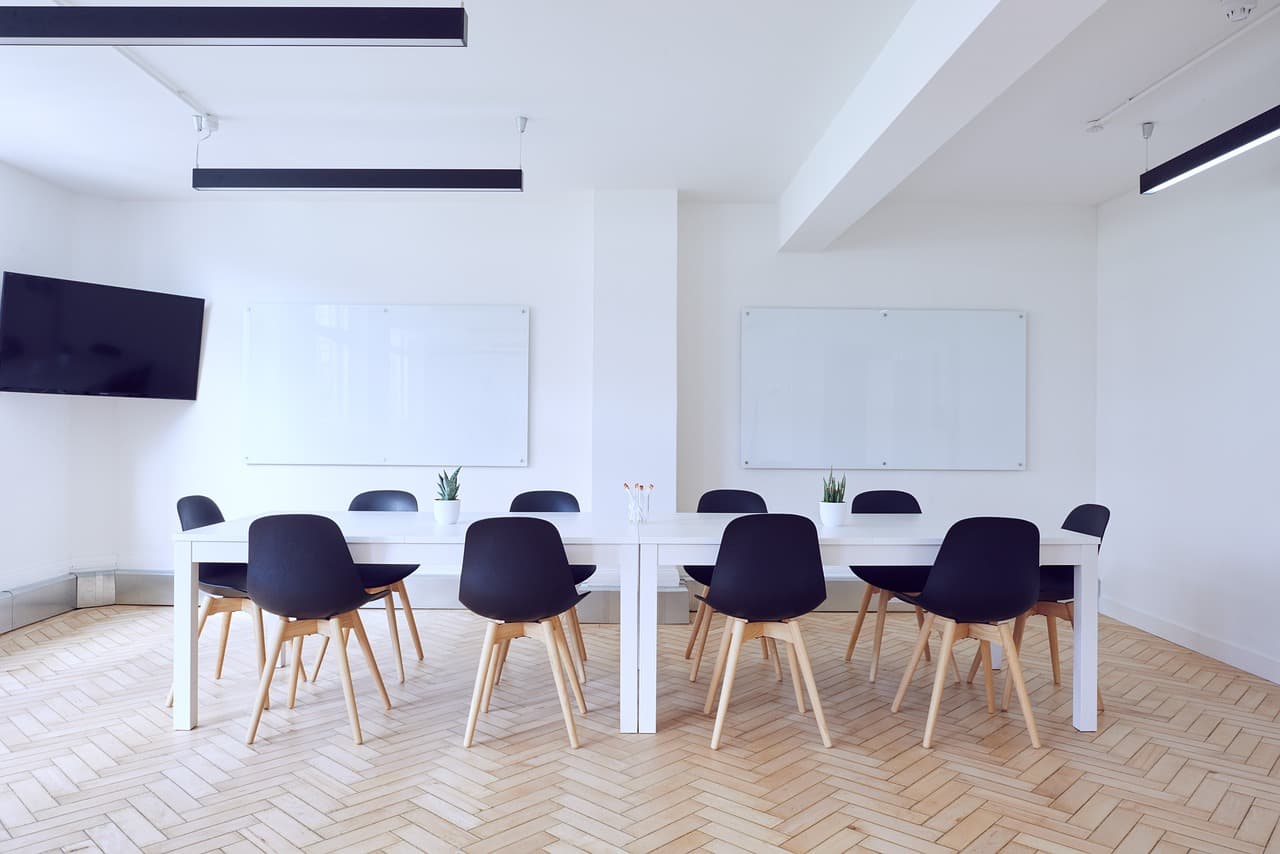
Unleashing Creativity: The Art of Naming Conference Rooms
"Explore ten exciting themes for naming conference rooms, from global cities to pop culture references. Learn how thoughtful naming can boost inspiration, navigation, and branding in your workplace while fostering a more engaging environment for your team. "


The Complete Guide to Naming Your Conference Rooms
Somewhere between "Conference Room B" and "The Disruption Hub" lies a naming sweet spot that most offices miss entirely. A good conference room name is easy to remember, easy to say, and tells visitors something real about the company. A bad one gets immediately replaced by "the room next to the printer."
This guide covers everything: theme ideas, practical naming rules, implementation steps, and the mistakes that trip up most companies. Whether you're naming 3 rooms or 30, the approach is the same.
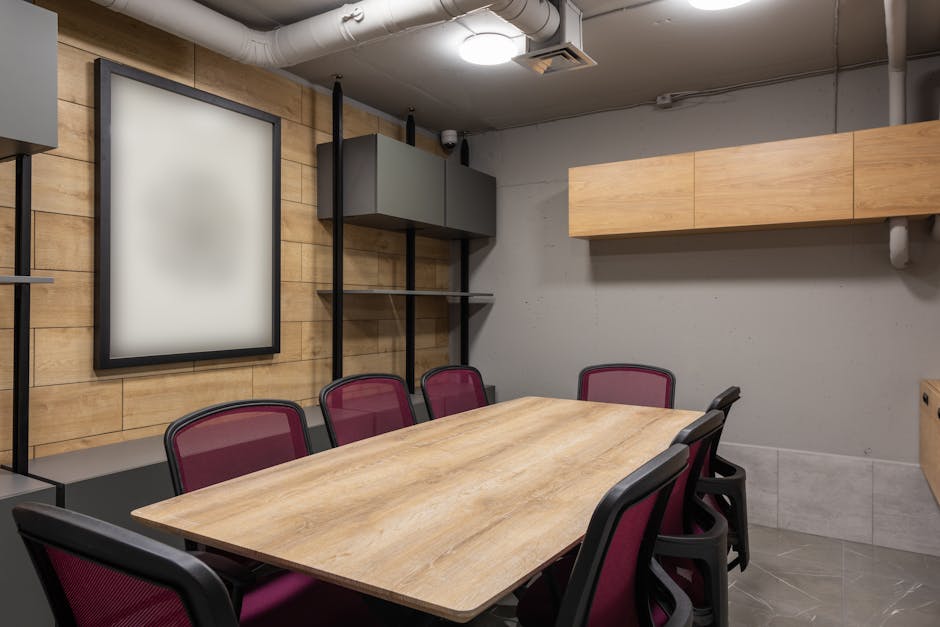
Why This Is Worth Getting Right
Conference room names serve three practical functions that plain numbering doesn't:
- Navigation. "Meet me in Sequoia" is clearer than "Meet me in Room 4B on the third floor." Named rooms are easier to direct people to, especially visitors.
- Identity. Names signal something about a company to every candidate, client, and vendor who walks through the door. They're a low-cost way to make an impression.
- Booking accuracy. Rooms with distinct, memorable names get booked correctly. Rooms with similar names or numbers ("301" vs "310") cause constant mix-ups.
None of these require clever or elaborate names. They require names that are distinct, pronounceable, and connected to a coherent theme.
Choosing a Theme: The Framework
Before looking at specific theme ideas, here's how to evaluate whether a theme will work for your office.
Can it scale? Count your rooms, then add 50% for future growth. If your theme can't produce that many names without stretching, pick a different one. "Planets in our solar system" works for 8 rooms. It doesn't work for 20.
Is it pronounceable? Every name needs to pass the phone test: can someone say it clearly in a sentence like "I booked us in [name] at 3pm"? Names that people stumble over get replaced by informal nicknames within days.
Does it connect to the company? The strongest themes have a link -- however loose -- to what the company does, where it's located, or what the team cares about. A biotech firm naming rooms after Nobel Prize-winning scientists makes sense. A SaaS startup doing the same thing is just borrowing prestige.
Are the names distinct from each other? "Aurora" and "Arora" on the same floor will generate scheduling errors. "Maple" and "Oak" are fine. Test for visual and auditory distinctiveness.
Ten Themes That Work (And Why)
1. Global Cities
Names like Tokyo, Barcelona, Sydney, and Nairobi. This theme works because nearly everyone has heard of these places, the names are short, and you'll never run out of options. It's especially fitting for companies with international offices or clients -- name rooms after the cities where your team members are based.
The risk: city names are so common that they don't say much about your company specifically. If distinctiveness matters to you, pair this with a narrower geographic focus (neighborhoods in your city, towns along a route that matters to the company).
2. Movies and Franchises
Hogwarts, Gotham, Tatooine, Wakanda, Jurassic Park. Film references generate instant recognition and tend to spark conversation. They work best when the entire office shares a particular fandom, or when you pick broadly known references rather than deep cuts.
The risk: pop culture references age. "The Matrix" felt cutting-edge in 1999 and retro-nostalgic now. Pick references with staying power, or be willing to rename rooms when the reference feels dated.

3. TV Shows
Westeros, Central Perk, Springfield, Hawkins Lab, Dunder Mifflin. Similar to movies but with a broader catalog to draw from. TV references tend to feel more personal -- people have stronger attachments to shows they watched over multiple seasons.
One approach: pick a single show everyone in the office loves and name rooms after locations from that show. Another: mix references from different shows but keep them all recognizable to a broad audience.
4. Historical and Scientific Figures
Einstein, Curie, Turing, Rosalind Franklin, Ada Lovelace. This theme works well for research organizations, universities, and tech companies. It carries built-in prestige and can highlight values like curiosity, persistence, and rigor.
The key: include context. A small plaque or framed photo with a one-sentence bio turns a name from a label into a conversation piece. Without context, it's just a name on a door.
Be thoughtful about representation. A room list that's entirely European men from the 19th century sends an unintended message.
5. Trees, Plants, and the Natural World
Redwood, Lotus, Sequoia, Orchid, Banyan. Nature names are short, easy to pronounce in any language, and carry positive associations. They pair well with biophilic office design -- actual plants, natural light, wood finishes.
This theme scales extremely well. Between trees, flowers, mountains, rivers, and national parks, you have thousands of options. You can also organize by category: trees on one floor, flowers on another.
6. Local Landmarks
Golden Gate, Big Ben, Statue of Liberty, Opera House. Naming rooms after landmarks near your office ties the workspace to its physical location. This is especially effective for companies with a strong local identity or multiple offices in different cities -- each office names rooms after its own local landmarks.
The risk: if your office is in a suburb without iconic landmarks, this theme can feel forced. In that case, broaden it to the wider metro area or region.
7. Musicians and Composers
Mozart, Beyonce, Beatles, Chopin, Marley. Music themes have wide appeal because almost everyone has a relationship with music, even if tastes differ. You can go classical, contemporary, or mix both.
One practical advantage: musician names tend to be short and globally recognized. "Lennon" and "Coltrane" work in any language.
8. Artists and Art Movements
Van Gogh, Frida, Picasso, Warhol, Basquiat. Art-themed names pair well with visual signage -- hang a print of the relevant artist's work in each room. This makes wayfinding intuitive: "the room with the Starry Night print" naturally maps to "Van Gogh."
For companies in creative industries (design, advertising, media), this theme reinforces professional identity without trying too hard.
9. Inventors and Engineers
Edison, Tesla, Da Vinci, Hopper, Berners-Lee. A good fit for engineering-driven companies, hardware startups, and manufacturing firms. The names carry connotations of problem-solving and building things, which can reinforce the kind of work happening in those rooms.
Mix eras and fields to keep it interesting. Pairing Grace Hopper with Nikola Tesla with Hedy Lamarr tells a more complete story than five names from the same era.
10. Space and Astronomy
Apollo, Andromeda, Hubble, Voyager, Orion. Space names have a built-in sense of ambition without tipping into corporate cliche. They're also surprisingly practical: short, distinctive, and easy to spell.
This theme works for companies of any size. A two-room startup with rooms named "Apollo" and "Voyager" doesn't feel like it's trying too hard. A 50-room corporate campus can use constellations, missions, planets, and moons to fill an entire building.
Naming Rules That Prevent Common Problems
Beyond choosing a theme, these rules will save you from the mistakes that derail most naming projects.
Keep Names to One or Two Words
"The Marie Curie Innovation Center" becomes "Curie" by the end of the first week. Save yourself the trouble and go with "Curie" from the start. Every extra word is a word people will drop.
Avoid Names That Create Rankings
"Gold," "Silver," "Bronze." "Premier" and "Standard." "The Penthouse" and "The Basement." Any naming scheme with a built-in hierarchy will make people feel like they got the lesser room. Even numbering can do this -- "Room 1" feels more important than "Room 7" for no good reason.
Don't Name Specialty Rooms With Your Theme
Mother's rooms, prayer rooms, wellness rooms, and first aid stations should be labeled clearly for what they are. Someone looking for the lactation room shouldn't have to decode that it's called "Serenity." Functional names serve these spaces better.
Make Names Visually Distinct in a Calendar
When people book rooms through a scheduling system, they're scanning a list of names quickly. "Maple" and "Magnolia" look similar at a glance. "Maple" and "Sequoia" don't. Check how your names look in your booking tool before committing.
Plan for the Naming Collision
If your company has offices in multiple cities and each office picks its own theme, you'll eventually have two rooms called the same thing in different offices. Solve this upfront by either coordinating themes across locations or prefixing room names with a city code in shared systems.
How to Roll It Out
A naming project can be done in a week. Here's the sequence.
Day 1-2: Gather input. Send a short survey or post in your company chat asking people to suggest themes (not individual names -- themes). Give everyone 48 hours to respond.
Day 3: Pick the theme. A small committee (3-5 people from different teams) reviews the suggestions and picks a theme. If there's a clear favorite from the survey, go with it. Avoid design-by-committee on the theme itself -- that's how you end up with no theme at all.
Day 4: Assign names to rooms. The same committee maps specific names to specific rooms. Consider room size, location, and any existing associations. The room where the company was founded might deserve a special name. The tiny phone booth doesn't need one.
Day 5: Update systems and signage. Change the names in your room booking software, update door signs, and send a company-wide announcement with a map showing the new names. A simple floor plan with the names marked is the single most useful artifact you can produce.
Ongoing: Reinforce. Add visual elements to each room that connect to its name. Use the names consistently in calendar invites and internal communication. Within two to three weeks, the names will feel natural.
When to Rename
Room names aren't permanent. There are legitimate reasons to rename:
- Your company's culture has shifted and the old names no longer fit
- The theme doesn't scale to accommodate new rooms
- Names have become associated with negative experiences (the room where layoffs were announced)
- A pop culture reference has aged poorly
When you do rename, do it all at once rather than one room at a time. A partial rename creates confusion that takes months to resolve.
What Not to Overthink
Room names are a small thing. They're a nice-to-have that improves the office experience at basically zero cost. But they're not a substitute for a good workplace, and spending three months on a naming committee is a sign that something else isn't getting enough attention.
Pick a theme. Assign names. Put up signs. Move on. The names will become part of your office vocabulary faster than you'd expect, and nobody will remember a time when Room 4B was just Room 4B.
Once you've picked out names for your meeting rooms, you'll want a system to manage bookings and availability. WOX's room booking solution makes it easy to see which rooms are free, book recurring meetings, and keep everything organized -- so your beautifully named rooms actually get used.
Learn More About Room Booking Guide
For comprehensive guidance, see our guide on meeting room booking and management.
Want to learn more about Room Booking?
Explore our complete guide with more articles like this one.